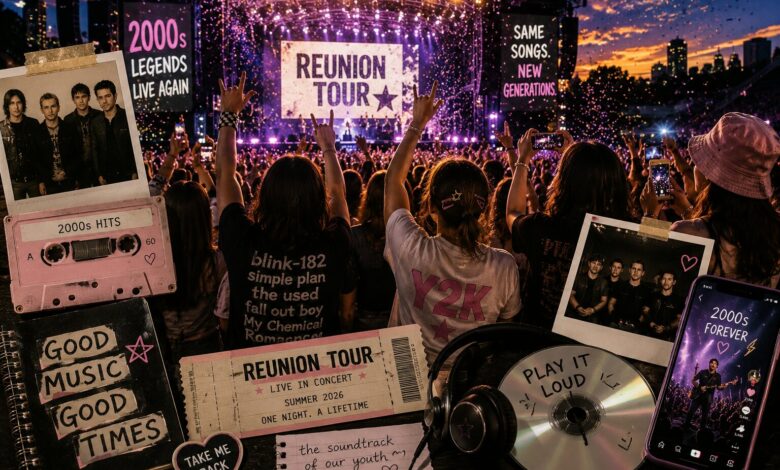
Summer 2026 has become the season of the reunion tour. While today’s chart-topping artists continue to dominate streaming platforms, some of the year’s biggest live music moments belong to bands that first rose to fame during the early and mid-2000s.
Packed stadiums, sold-out presales, and constant social media discussion show that nostalgia has become one of the entertainment industry’s most valuable assets. Yet one of the most surprising developments is who is buying the tickets. Alongside Millennials reliving their teenage years, Gen Z fans are enthusiastically embracing reunion tours they were often too young to experience the first time around.
This shift reflects more than musical nostalgia. It highlights changing ideas about live entertainment, fandom, and how younger audiences discover cultural icons.
Why Are 2000s Music Reunions So Popular in 2026?
Reunion tours offer something many modern fans crave: shared cultural experiences.
Streaming allows listeners to access virtually any song at any time, but live concerts create moments that cannot be replicated through headphones or playlists.
For older fans, reunion tours provide an opportunity to revisit music connected to important memories. For younger audiences, they represent a chance to experience legendary performances that previously existed only through videos and stories.
Together, these generations are transforming reunion concerts into some of the year’s biggest entertainment events.
Why Is Gen Z Driving Ticket Demand?
Gen Z has developed a unique relationship with music history.
Unlike previous generations, younger listeners can instantly discover artists from any era through streaming platforms, short-form videos, and fan-created playlists.
A song released twenty years ago can become popular again overnight after trending on social media.
As a result, many Gen Z fans already know the lyrics, personalities, and cultural significance of bands long before a reunion tour is announced.
For them, attending these concerts feels less like revisiting the past and more like finally participating in a cultural moment they missed.
How Has Social Media Fueled the Reunion Boom?
Platforms built around short videos have become powerful engines for rediscovering older music.
Popular songs regularly resurface through viral edits, nostalgic challenges, concert clips, and creator recommendations.
Instead of introducing audiences only to new releases, algorithms frequently connect younger users with classic albums and memorable live performances.
This constant exposure keeps legacy artists culturally relevant even between album cycles.
Communities across TikTok Music and Instagram Reels have played an important role in bringing older songs back into everyday conversations.
Why Do Reunion Tours Feel Like Major Cultural Events?
Modern concerts have evolved far beyond live performances.
Fans now plan themed outfits, create travel itineraries, organize group meetups, and document entire weekends around major tours.
Attending a reunion concert has become both an entertainment experience and a lifestyle event.
Many concertgoers view these shows as opportunities to celebrate shared memories while creating new ones with friends and family.
This growing emphasis on experiences rather than possessions helps explain why live music remains so valuable.
How Does Y2K Nostalgia Influence These Tours?
Fashion, entertainment, and music have all embraced Y2K influences in recent years.
Reunion tours naturally fit into this broader cultural movement because they allow audiences to reconnect with one of the defining entertainment eras of the early internet.
Many fans extend the nostalgia beyond the concert itself by wearing vintage-inspired outfits, collecting retro merchandise, and revisiting albums that shaped the decade.
This connection between music and fashion continues strengthening Y2K lifestyle trends across younger audiences.
Why Are Millennials and Gen Z Enjoying the Same Concerts?
Although both generations attend the same shows, their motivations often differ.
Millennials may associate these bands with adolescence, school memories, or early adulthood.
Gen Z often approaches the music from a perspective of discovery, viewing classic artists as timeless rather than nostalgic.
These complementary experiences create unusually diverse audiences where multiple generations celebrate the same songs together.
That shared enthusiasm has become one of the defining features of today’s reunion tour boom.
Beyond the performances themselves, many fans are equally interested in how artists navigate life away from the spotlight, including the habits and perspectives that help them maintain long-term creative careers.
How Are Legacy Artists Finding New Audiences?
Streaming platforms have dramatically extended the lifespan of music catalogs.
Instead of relying on radio airplay or physical albums, older songs remain continuously available to new listeners.
When social media trends introduce younger audiences to classic tracks, artists often experience renewed popularity long before announcing reunion tours.
Organizations such as the Recording Industry Association of America (RIAA) continue documenting how catalog music remains an important part of modern listening habits.
This renewed visibility creates opportunities for legacy artists to build fan bases that span multiple generations.
What Does This Trend Reveal About Modern Fandom?
Today’s fans are less concerned with when music was released than with how it makes them feel.
Streaming has blurred the boundaries between generations, allowing older songs to compete naturally alongside new releases.
As a result, fandom has become increasingly cross-generational.
Music discovery is no longer tied to a particular decade but to shared online communities, recommendations, and memorable experiences.
Fans also enjoy learning how artists grow beyond music, with many following the books, creative influences, and personal philosophies that shape their careers.
Could the Reunion Boom Continue Beyond 2026?
There are strong reasons to believe it will.
As more iconic artists celebrate milestone anniversaries, reunion tours are likely to remain attractive to both audiences and promoters.
The combination of streaming discovery, social media engagement, and demand for live experiences creates favorable conditions for continued success.
While every reunion is unique, the broader trend suggests that nostalgia has become a lasting force in modern entertainment rather than a temporary fad.
Frequently Asked Questions
Why are 2000s music reunions so popular?
They combine nostalgia, live entertainment, and shared experiences that appeal to both longtime fans and younger audiences.
Why is Gen Z attending reunion tours?
Streaming platforms and social media have introduced many Gen Z listeners to classic artists, making reunion concerts feel like must-see cultural events.
Viral videos, nostalgic content, and fan communities help older songs reach new audiences and generate excitement before tours begin.
Why are reunion concerts selling so many tickets?
Fans increasingly prioritize memorable experiences, and reunion tours offer a unique opportunity to celebrate beloved music in a live setting.
Are Millennials and Gen Z enjoying these tours for the same reasons?
Not always. Millennials often reconnect with personal memories, while Gen Z frequently discovers the music for the first time through digital platforms.
Will reunion tours remain popular after 2026?
Current trends suggest demand will remain strong as streaming, nostalgia, and multi-generational fandom continue shaping live music.
Conclusion
The resurgence of 2000s music reunions reflects more than nostalgia. It shows how streaming, social media, and live entertainment have reshaped the way audiences discover and celebrate music across generations.
With Gen Z joining Millennials in filling stadiums, reunion tours have become cultural events that bridge the past and present. As classic bands continue attracting new listeners alongside lifelong fans, the reunion boom is proving that great music rarely belongs to just one generation.